Showing posts with label faith. Show all posts

Thursday, December 6, 2012

Storytelling


“There was another life I might have had, but I am having this one.”
Kazuo Ishiguro - Never Let Me Go


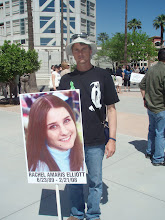
It’s been nearly five years since Rachel was killed. Shortly afterwards, Jill and I had dinner with a couple who had lost their son nearly ten years earlier. I knew they knew how we felt because already the man had asked me questions I hadn’t told anybody were on my mind. The burning question, I think, for both me and Jill the night we had dinner was: “Will we ever get over this?”

From my current vantage point, I can see the foolishness of the question. Then, we hadn’t yet fully absorbed the reality of what we were facing: the rest of our lives without our daughter. We were desperate for hope from someone who had walked the road ahead of us. The couple answered our question as compassionately and honestly as they could. Ten years after his death, they told us, they still weren’t over the loss of their son. For as long as they walked this earth, they never expected they would be. The going get easier, but it never gets easy; the hurt gets better, but it never goes away. We should have known. They had learned to live without him, as harsh as that may sound. In Life of Pi, Yann Martel says, “You can get used to anything...isn’t that what all survivors say?” And while getting accustomed to the loss of a child seems at first unimaginable, undesirable, heartless even, it ends up, after all, to be sadly, horrifically...possible. Perhaps even necessary. Our hearts sank there at the table as we imagined the road ahead. We didn’t want to drink this cup, but drink it we would, together. A bitter communion. 

The man we had dinner with occasionally attended and preached at our church. He had formerly been an elder. I took his place on the board. The couple had ceased attending before Jill and I began. I don’t think we had met the woman before the night of our dinner. Though I never knew exactly why she quit going to church with her husband, it is reasonable to assume she had spiritual difficulties in the aftermath of her son’s death that made it impossible for her. They may have had some understandable and all too common marital problems. I detected some uncharitable attitudes about her and the choices they had made... 

In the days before Rachel’s death I thought of the man as a tragic and somewhat heroic figure. I admired him, but, of course, I did not envy him. I remember being always aware of his loss, even when it wasn’t explicitly mentioned or acknowledged. Like talking to someone behind glass. You can have a normal enough conversation, but there’s always that between you. Content to just admire and pity him from a distance, I never wanted to know how this man had managed to survive. Like most, I didn’t think I could. I recognized it could have been me in his shoes, but I was so shamefully relieved I didn’t have to wear them that I never wanted to tempt fate by getting too close.

I recently heard a radio broadcast of a Jewish mother who had lost her son to a Palestinian sniper. She said that those who manage to survive the loss of a child must choose to live. Is that what happened? Did I choose to survive? I don’t remember, not consciously, anyway. Many nights I would have been content to close my eyes on this world and wake up in the next… But there is always something that must be done in the morning.

Predictably, Jill and I quit attending church. We made a valiant attempt to hang in there; we really did. But after some developments that required further commitment and demanded more involvement, we finally had a long talk in the hot tub and confessed to each other that we simply no longer had the heart for it. Though I still cannot articulate why, church had become more hurtful than helpful for both of us, and we couldn't stand pretending otherwise any more. We realized that we weren’t serving anyone, least of all ourselves, by staying there when we lacked any true desire. We haven’t been back to the last church we attended as an intact family since the end of last December. It turned out to be almost like an unintentional New Year’s resolution - except that we have uncharacteristically nearly perfectly kept it.  Our year without Jesus…

After writing that last sentence, I Googled it to see if anyone had written on that topic, and I found this blog post: https://rivercityrevolution.wordpress.com/2009/03/12/a-year-without-jesus/ The author speculates about the antithesis of a popular book from a few years back called, My Jesus Year. He qualifies his blog entry as merely “a thought experiment”, confesses how easy it would be to fall into the (bad, selfish, lazy) habits of “pretend atheism” and cautions people against actually trying the experiment for themselves at home. I have to admit, it’s scary how easy it is has been to drop the routine of a lifetime.

It would be an exaggeration, though, to say that Jill and I have lived like atheists for the last year. Practical agnostics, maybe. The truth is, God is still a central figure in our lives, even though we are less certain than we have ever been about who He is, what He is like, and what we can expect from a relationship with Him.

God and church are two distinctly different things. The Bible asserts that nothing can separate us from the love of God. Jesus, Immanuel - God with us - made an unqualified promise that he would never leave us nor forsake us. I learned from Oswald Chambers that because we lose our old idea of God does not mean we have thereby lost God, and the loss of our former form of belief and the birth of a realization more closely approximating the truth is perhaps always and necessarily painful and traumatic. Did we really believe the truth could be cheaply and painlessly acquired? Doubt is as undeniable and inevitable in this life as pain, loss, confusion, and disappointment. Christ felt abandoned on the cross, but I don’t believe even he ever really lost God. I don’t think that is possible. I hope not. When walk out of church, God inhabits the world we encounter outside the door. I really believe God is always with us, as near to and indistinguishable from our very breath and being. 

Dan Haseltine, the lead singer of Jars of Clay, recently blogged about his break with the traditional evangelical church. He said, “I have to believe that God is in our story.” It isn’t good enough for him or for me anymore to be told what to believe about God. We each have our own experience that has brought us to the place where we now find, or have lost, ourselves. Through no fault of our own we have fallen out of step with the rest of the parade. It wasn’t our plan. I was content teaching Sunday School every Sunday, preaching, serving as an elder. I would happily have remained in that place if I hadn’t been removed by forces beyond my control. Sometimes, surrender is the only viable course of action. Maya Angelou said, “...life...taught me undeniably that surrender, in its place, (is) as honorable as resistance, especially if one (has) no choice.” 

If God is in our story, and our story takes where we do not want to go, then it is an act of faith to surrender and trust that God has something vital to teach us along the way. Nothing else makes any sense to me. Right now it’s the only faith I have. In Life of Pi, the main character tells the inquiring writer that he will tell him a story that will make him believe in God. It is his story, of course. How else could he know? Martin Luther, the original Reformer, said, “God writes the Gospel not in the Bible alone, but also in the trees, and in the flowers and clouds and stars.” I would add, he also writes it in our hearts and with our lives. How else could we believe?

Sunday, March 18, 2012

3:31...

I lay with my eyes closed in the darkness, awake.


*


The day before I carried the obvious truth like a hidden wound, acting as if I could live with it, as if anybody could. We had lunch with family in my sister’s restaurant, Farwood Bar & Grill. Unless you already knew the story, you could not have guessed. And I did enjoy our time together, because I realize more than ever that every moment with those we love is precious. But I am living a double life: living with gratitude while carrying this grief. Maybe life is never simple, but always double, triple, multiple. I walked around all day, thinking, “Four years ago today, this was the last day Rachel walked this earth. What was she doing at this moment four years ago? What was she thinking? What was I?” Blissfully ignorant. Thinking it would go on like this forever, or something approaching it. That there would always be more time…


I had a dream or a vision, what ever you would call it. Rachel pulled up to the curb in her Honda. Jill and I were out working in the yard. I put down whatever was in my hand and walked toward her with wonder. Jill too. Rachel jumped out of her car and ran across the yard to meet us, beaming, delighted, I think, to surprise us. She had been gone a long time, and we weren’t expecting her. There was this beautiful moment of joy before the realization that she was really dead and I was only dreaming...


It always feels like a betrayal to be able to go on living. Those who know better will say that is unhealthy thinking. It is, I know. I turned 50 on February 6. Jill and I spent the weekend in the Anderson Valley to celebrate our 24th anniversary. We took the long way home, touring the wine country just waking into spring, and stopped at a couple of unique places to eat we had seen on Diners, Drive-Ins, and Dives. It was a beautiful weekend in every way. But I couldn’t shake the feeling that I was taking my leave, saying goodbye, likely never to pass this way again. I was painfully conscious that I was just passing through, that this strange and beautiful world...this life...doesn’t belong to me anymore, if it ever did. Though we mostly don’t behave like guests, but rather like we own the place and are trying our best to use it up, the truth is that we are only visiting here. But I suspect it is a dangerous mistake to let that keep us from forming attachments…


So, my birthday, February 6, was a Monday. We were stepping back into our routine after our extraordinary weekend. I wanted to be big about it, so I got out of bed as usual, made the coffee while Jill took her shower, and then sat in bed to read to her from the Daily Bible. As I read, a horrible awareness crept upon me: This was the passage we had read the morning Rachel was killed. I tried to read as if nothing was wrong, like I didn’t notice, but Jill stopped me to confirm the realization that was dawning on her, too. It was 5:00 a.m. and, after that, my day was already over...


Of course, I wonder about such coincidence. The day before, while driving through the wine country, different renditions of Amazing Grace had played back-to-back on the iPhone we were playing on shuffle through the car stereo. I asked Jill if she thought my smart phone was smart enough to know it was Sunday. Or maybe it was a sign?


We are haunted by the presentiment that maybe there is more to this life than the surface suggests. And tortured by the misgiving that maybe there isn’t.


The passage from Proverbs for that same day says, “The Lord directs a person’s steps. Why should we fret to understand every step along the way?” It’s true, I don’t know where I am going, so it is impossible for me to judge whether I am taking one true step in the right direction. Wiser souls would counsel me to let it go and simply let it be what it is. I’m not there yet.


Jill and I are reading Joan Chittister’s spiritual memoir, “Called to Question.” I am surely contorting the passage to fit my own interpretation, but she says, “Life is not about getting God. Life is about growing in God.” Presumably, we are all always in God, because there is no outside. She goes on to say, “We ripen. We learn. We hurt. We survive one thing after another. And we go on...in the end, we gain what we came to get...One way or another life batters us until we get the unavoidable. Sometimes we get it with glory; sometimes we get it in disgrace…” The God who is life inexorably teaches us. We learn what we need to know. We are not our own. We do not know who or what we are to become. We simply trust the process, and the God of life whom we can only hope controls it.


What kind of terrible faith is this?


The morning I woke up to that passage, I took it as a cruel cosmic joke.


That is the human problem, older than Job, with which those who suffer struggle: Is the God who guides the process loving, indifferent, or malevolent? Does God torture us for amusement? What are we to make of this mess?


The problem with my interpretation of events is that it flies in the face of the message of the passage. It is the passage in Ezra that affirms, “God is good. His faithful love endures forever.”


In spite of overwhelming evidence to the contrary, does love really guide the universe?


I have come to the conclusion that I over-reacted. I don’t blame myself. One emotional law I have learned is that in the absence of convincing proof to the contrary (and, really, what is proof?), the most loving explanation is correct. I guess you could call it the benefit of the doubt theorem...or the benefit of faith. If God really is good, as I have heard and still, tremulously, believe, and really does love me with a love that endures forever and transcends time and circumstance, then it is just possible that reading that passage on my 50th birthday was God’s way of telling me I am loved - in spite of everything.


As Theodore Roethke said, “I learn by going where I have to go.”


*


This morning, February 21, 2012, I awoke and kept my eyes closed in the darkness. When I finally opened them and looked at the clock it was 3:31 a.m. One minute after Rachel was pronounced dead four years ago. The beginning of the rest of my life…


“I wake to sleep, and take my waking slow.

I learn by going where I have to go.”

Theodore Roethke - “The Waking”

Friday, July 9, 2010

PUTTING HER AHEAD OF US


Many people wonder at our courage and strength. I understand that they simply don’t understand. I know, because I used to feel the same way: How could anyone survive the death of a child? It is inconceivable. And, the fact is, we really don’t want to conceive of it. We don’t want to entertain the idea that it could happen to us. The fact that God only chooses certain people for such a trial is a sure sign of their extraordinary character...Isn’t it?

That’s not the way it works. I can’t conceive of any more loss than what I have already suffered: best friend, grandparents, sister, daughter...I know, however, if I don’t die first, other losses will mark my pilgrimage through this valley in the shadow of death. Loss is one of the naked facts we must learn to reckon with and, finally, accept. We are all losers. Jesus tried to teach us: we only gain life by losing it, letting go. We only keep the treasure we give away. It all slips through our fingers eventually; why not let it go, give it up, give it away? We spend so much of our lives trying to cling to what we cannot hold. Our time would be better spent in other more worthwhile pursuits: loving, for one.

This is what I have learned: We endure what we must. I don’t know how the starving AIDS orphans endure their plight. They do it because they must. I have survived the loss of Rachel so far not because I am strong or courageous or virtuous or special, but, simply, because I have no other real option. And that is the way we learn all the hard lessons of life - Not because we choose, but because, at last, we must reconcile ourselves to the given facts of our lives. So much for victorious living. It is much more like surrender, more like defeat. I would not have chosen this path; it is not what I had planned for my life, or my daughter’s. A daughter should steward the memory of her parents, not the other way around. Everything is out of order now…

But look at Christ...His dark agony, his apparent defeat in death on the cross, turned out to be the victory he sought and on which all our hopes depend. He overcame by submitting to his defeat, by suffering and dying. It doesn’t make any sense, but it does give us hope.

In the end, God’s promises are our only hope. A desperate, drowning person will grasp at anything, I know. But on my best days, I truly believe. Some would counsel us simply to put this whole horrendous mess behind us; forget about it and move on. We can’t do that. We live in the present, and Rachel’s life and death has changed the whole landscape of our present lives. Even if we could, we wouldn’t want to. Rachel, our hearts insist, is more than a memory. The only thing that keeps us moving forward instead of dwelling in the past now, is the awareness that it is only in the future that all our hope is realized. We will never find Rachel in the past. We can’t put her behind us. We must put her ahead of us. That is what keeps us going. She cannot come to us, but we shall go to her.

Saturday, January 17, 2009

To Pray Or Not To Pray

"...theology must not try to be any clearer about God than God is about Himself." Mike Mason, The Gospel According To Job


Grief is a wicked cocktail: loss, pain, confusion.  All thoroughly mixed up. 

Would good theology make our grief any easier, I wonder? Would answers ease us into acceptance?

We keep coming back to the same old nagging questions. We admit that God did not cause Rachel to die. We acknowledge that a selfish, drunken woman killed her. But did God allow it to happen? That is the unavoidable issue of the Book of Job that we are studying in our Sunday School class. Job did not deserve to suffer, any more and probably much less than any other merely human that has ever walked this earth. His suffering was “caused” by the devil working through natural, human and spiritual agents. But it is also made clear that God allowed it. Satan had to get God’s permission in order to “test” Job with horrific loss and pain.

The night Rachel was killed, her car failed to start. It had never failed to start before. She and her friend Andre waited and tried to start her car three times before they finally succeeded, delaying Rachel’s departure for half an hour. If the car had started on the first or second attempt, she would be here with us now. If it had failed to start the third time, she would be here with us now. It is a seemingly small thing for God to accomplish: the timing of the ignition of an automobile. Of course, we did not pray that prayer specifically, but we did pray daily for Rachel’s safety. We prayed for her safety early in the morning of February 21, 2008, not knowing she was already dead.

Either God can answer prayer or He can’t. Either God does answers prayer, or He doesn’t. If He can’t or He doesn’t, why are we enjoined to pray? If He can and does then why did He choose to disregard our dearest request, the one we most cared about in this world? We are not perfect, and neither was Rachel, but none of us deserved this. If God can’t be trusted with our “big prayers,” our most heartfelt desires, why waste our breath nagging Him with the insignificant details?

I don’t have the answers. When I don’t understand, all I can do is fall back on what I do know. God did not rescue His own Son from the plans or the hands of evil men though He cried out to His Father to be delivered. We have to conclude that either God is so ineffectual that He could not even help His own beloved Son, or else He chose to allow it. Could we be callous enough to suggest He didn’t care? That would be contrary to what we know of parental instincts. We love our children. We are concerned for their welfare. We do everything in our power to keep them from coming to harm and to spare them unnecessary pain. God, if He is God, must be at least as good a parent as we are.

Of course, God has a plan. But did it have to be this way? 

Evil is a choice. Goodness is a choice. We can choose to work with God to build His kingdom or we can work against Him. God often accomplishes His purposes in spite of the choices we make. He uses the very worst intent of the most evil of His rebellious creatures to achieve His good purposes. There is some mysterious alchemy here we cannot fathom.

My daughter is killed by a wicked woman. God’s Son is killed by wicked men. I can’t imagine God scrambling behind the scenes for a contingency plan. I don’t think it works like chess with each player constantly adjusting their game in response to their opponent - God backed into a corner, wondering what move to make next, sacrificing pawns to achieve His ultimate conquest...

The questions are too big, and too confusing. My mind is stretched beyond my capacity to follow my own crooked line of reasoning. 

I must resign myself to the fact that I am not God. And I am not big enough or smart enough to judge Him.

Maybe we don’t have to understand. If we did, God would probably have made us smarter than we are, with eyes good enough to see a bigger picture.

I fall back on what I do know - what I have been taught and what I have learned through experience.

The morning Rachel was killed, Jill and I read in our One Year Bible that “God is good. His faithful love endures forever.” We choose to accept or reject that statement, and we are confronted with it again and again in the Bible - and in our own lives. I have learned it is a matter of faith. When the evidence of our experience doesn’t correspond with the truth God has revealed about Himself, we have a choice to make. Like Nicolas Cage to Diane Kruger in National Treasure, God is asking, “Do you trust Me?” 

“Faith...is the evidence of things not seen.”

I had a conversation soon after Rachel’s death with a good friend of mine, Josh Moreland. I explained to him that I had grieved the death of my best friend, Erik Kolar,  rejecting God, (not that He wasn’t there and ready to embrace me - In my anger and pain I rejected the comfort of His loving presence). And I had grieved the death of my sister, Vanessa Elliott, embracing Him. I have learned it is better to grieve with faith in God’s goodness and love than without it. It is better to trust in Him than to trust in myself. 

I don’t know why God allowed my daughter to be killed by a drunken fool. I think it may just be part of the bargain of being. My contention is that I would be offended by any possible explanation. No reason would be good enough for me to allow my daughter to be killed. I am not God...or Abraham even. I would not sacrifice my daughter to achieve any conceivable good. Myself maybe, but not her. 

I think it is better that I do not know. I let the question go. Perhaps, someday, with better eyes I will see, with a better mind I will understand. But I resign myself to the fact that I may never know. Rachel is God’s daughter; I ascribe more significance to my contribution than I deserve to take credit for her life. 

What I have learned is that presence is better than understanding. When we are in pain we need comfort, not a lecture. That is why Job’s friends were better to him in their silence than in their speech.

Job never understood what was happening to him. He was never given any answers, and the deaths of his children were never justified. Nevertheless, Job clung to God in the darkness for dear life. Of the people who speak in the book, only Job bothers to pray. He continues to pray, and his prayers are not nice, Sunday School prayers.

I believe God is good. I believe His faithful love endures forever. I believe He loves me and He loves Rachel. I don’t understand, but I will cling to Him in spite of my confusion. I pray because it reminds me of my dependence on God for everything I have and am. I pray because prayer reminds me of His loving presence. And that is a comfort.

As Job said, “Blessed be the name of the Lord.”  Amen.


*

I went back to bed and slept in the middle of writing this. I dreamed of an angel telling me, “learning is the head catching up with the heart. You are learning,” she said, and she smiled a beaming, beautiful and loving smile, the kind of smile that blesses your whole day. 

I know: it is only a dream...